Panels in production
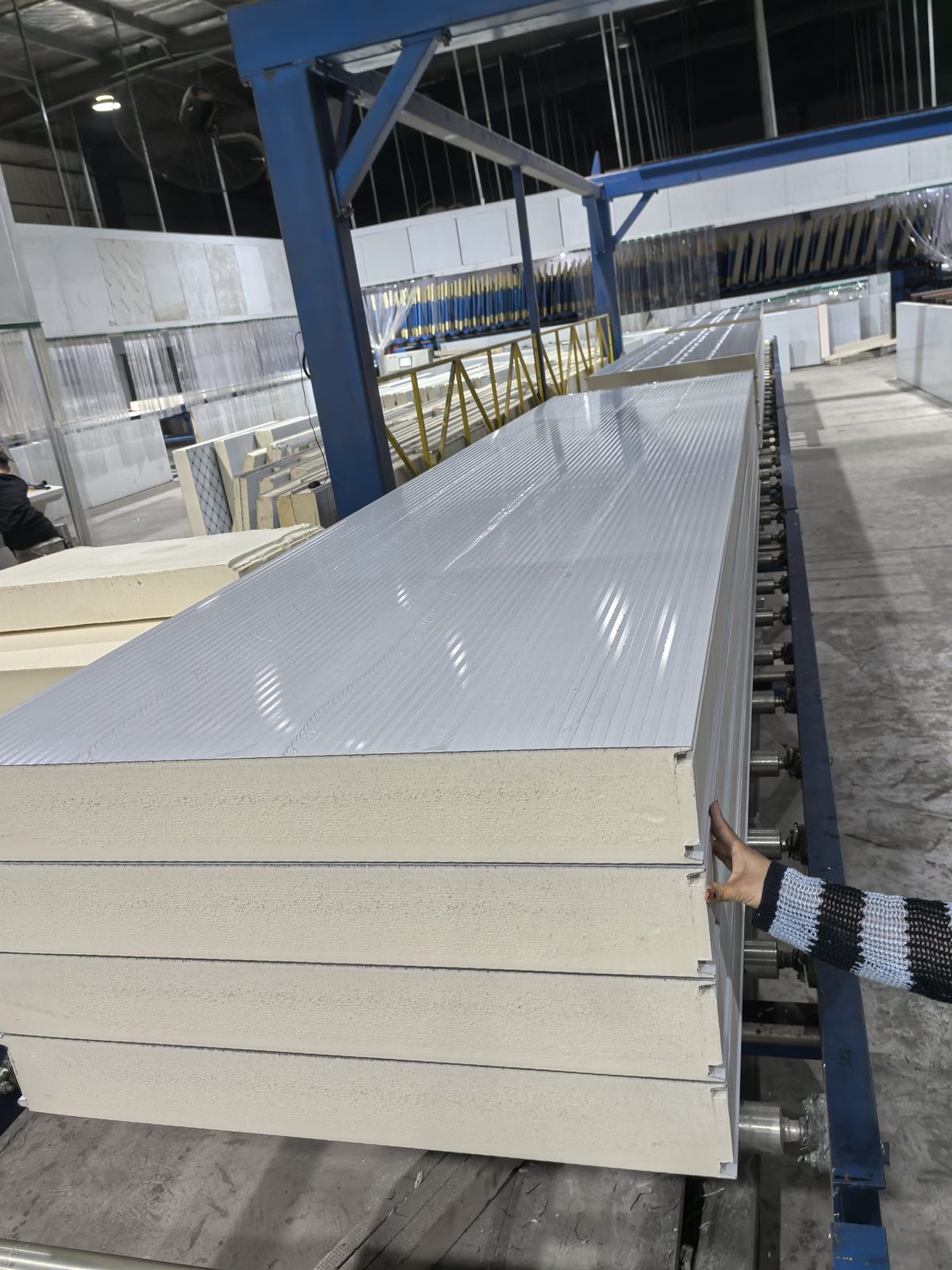
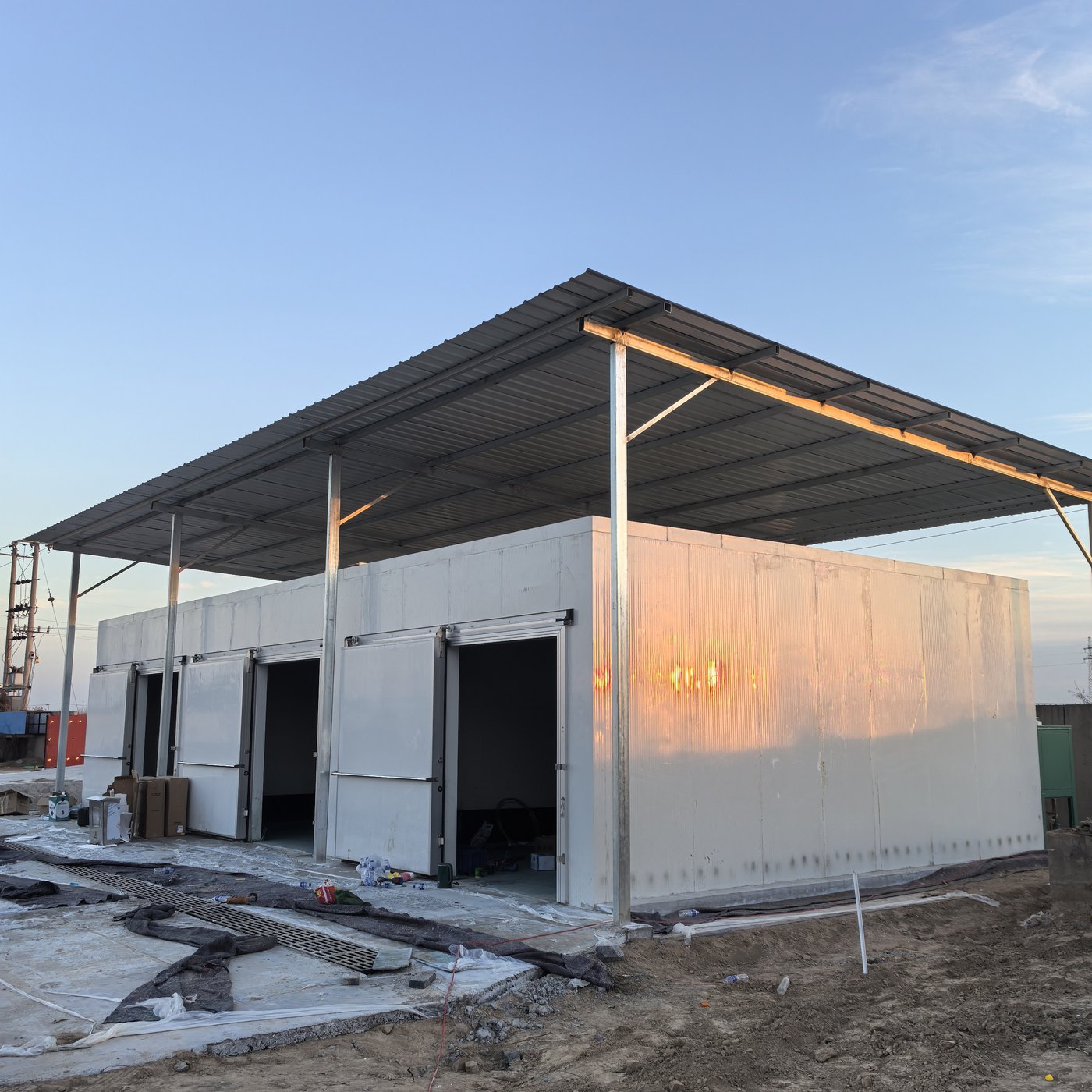
Panel thickness is calculated from the room temperature, the temperature difference across the panel and the local climate. It is not chosen by habit — an over-thick panel wastes investment, a thin one costs electricity for the life of the room.
Thickness, core, joint and surface. Each one is set by the room, not by a price list.
| Decision | Set by | If it is wrong |
|---|---|---|
| Thickness | Room temperature, temperature difference, local climate, running hours | Too thin: high heat gain, the unit runs long, the outer face condenses or frosts |
| Core | Insulation requirement, fire class, water absorption, budget | High absorption or low density: performance decays over years and cannot be restored |
| Joint type | Room size, lifting method, whether it will be relocated | Wrong joint: cold bridging at the seams, condensation, slow assembly |
| Surface | Hygiene class, washdown, corrosive exposure | Ordinary steel in a food room: corrosion, cleaning cannot be completed, hygiene audit fails |
The four are decided together at design stage. Changing one after the panels are made means remaking them.
| Symptom | Usual cause |
|---|---|
| Floor heaves and cracks | Vapour barrier damaged; soil moisture below freezes and expands |
| Local frost on the floor | Missing or insufficient insulation; a cold bridge |
| Floor permanently damp | Barrier detailed incorrectly, or falls running the wrong way |
| Heave that cannot be reversed | Once frost heave has formed, the floor has to be rebuilt |
Floor insulation and the vapour barrier are the two items most often cut to save cost, and the two that cannot be fixed later without demolishing the room.
 Scan to chat